Choosing an Ice Cream Cup supplier is not simply a matter of comparing prices. Global buyers must examine materials, production controls, delivery reliability, and customer support. A cup may look attractive in a catalogue, yet soften inside a cold freezer. Its rim may also fail when operators fill it quickly during busy service.
Packaging consultant Robert Lilienfeld offers a useful principle: “Packaging must protect the product before it promotes the brand.” This idea fits every Ice Cream Cup purchase. Suppliers should demonstrate food-contact compliance, freezer resistance, leak protection, and stable printing quality. Buyers should request samples, inspect the inner coating, and test filled cups for several hours. Small details matter. A weak lid fit can create waste, complaints, and damaged cartons.
This guide introduces ten Ice Cream Cup suppliers serving international buyers. It considers manufacturing experience, available sizes, paper and plastic options, minimum order quantities, customization, certifications, and export capabilities. It also looks at practical issues, including carton strength, container loading, and communication across time zones. Sustainability is included, but it should not be accepted as a vague marketing claim. Buyers need clear material information and realistic disposal guidance.
No supplier is perfect. Some may offer excellent printing but limited flexibility. Others may provide competitive prices but slower sampling. That trade-off deserves attention. The strongest choice depends on product temperature, serving volume, market requirements, and brand expectations. Readers should still verify current documents and samples before placing an order. A polished website is not proof of consistent production.
What Defines a Reliable Ice Cream Cup Supplier?
A reliable ice cream cup supplier does more than offer attractive prices. They understand how packaging performs during filling, freezing, stacking, and delivery. The cup should resist cracking at low temperatures, hold its shape, and keep the rim clean during sealing. Small details matter.
I have found that practical testing reveals more than a product sheet. Ask for samples from the intended production batch, not only showroom samples. Fill them with ice cream, freeze them overnight, and stack them under pressure. Check for leaks, softened walls, distorted rims, and difficult lid fitting. A reliable supplier should explain material composition, food-contact documentation, production controls, and batch traceability in clear language. Vague answers create unnecessary risk.
Global buyers also need predictable communication. Confirm minimum order quantities, sample timelines, production capacity, packaging methods, and shipping documents before placing an order. The supplier should report delays early, even when the news is uncomfortable. I once saw a seemingly minor carton change create crushed cups after long-distance transport. That mistake was preventable. Still, no supplier operates perfectly. What matters is whether they investigate the cause, share evidence, and improve the process. Factory photos help, but an independent audit or live production inspection provides stronger assurance. A dependable partner welcomes reasonable questions instead of treating them as distrust.
Key Materials, Designs, and Customization Options
Selecting among the 10 best ice cream cup suppliers requires more than comparing prices. Material choice affects freezer performance, food safety, and recycling options. Paperboard cups offer strong printing and a familiar premium feel. Polypropylene cups resist moisture and cracking during storage. Recycled plastic can improve resource efficiency, but supply consistency must be verified.
Smithers valued the global packaging market at approximately $1.2 trillion in 2023. Its sustainability research also identifies material reduction and recyclable structures as major development priorities. This matters for ice cream packaging, where frozen products often need moisture-resistant barriers. A thin coating may protect the cup. It may also make recycling harder. That trade-off deserves honest testing.
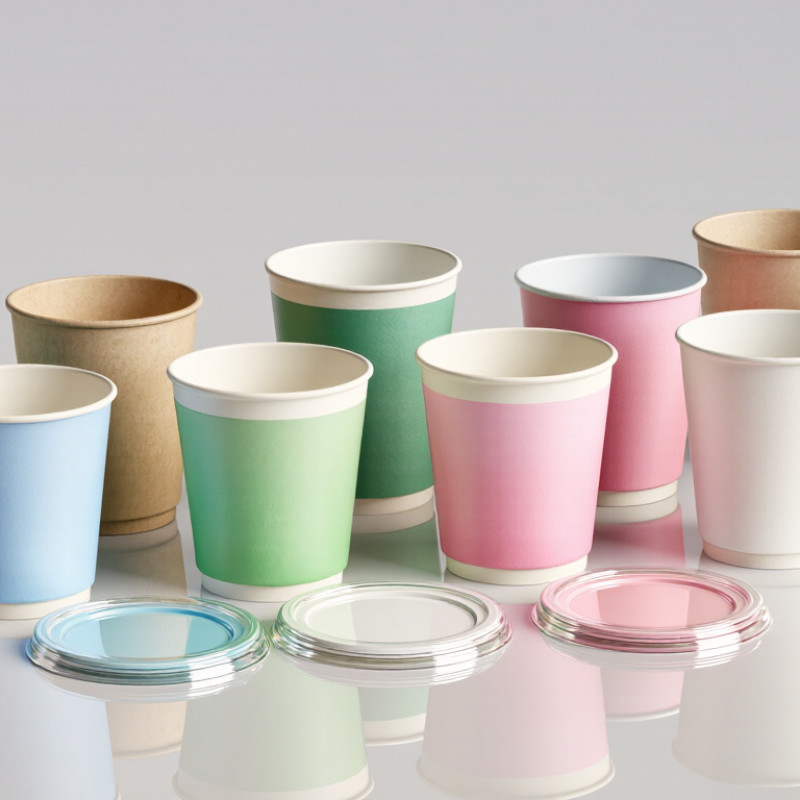
Design details influence both handling and shelf appeal. A rolled rim improves drinking comfort and lid fit. A tapered shape supports stacking and easier product release. Double-wall construction adds insulation, but increases material use. Custom options include full-color printing, matte or gloss finishes, embossing, sleeves, tamper-evident lids, and variable sizes. Mordor Intelligence projects continued growth in the ice cream packaging market through 2029, increasing pressure for practical customization. In supplier evaluations, request freezer-cycle tests, migration documentation, compression results, and print samples. Do not trust a beautiful prototype alone. It may fail after weeks at sub-zero temperatures. Minimum order quantities, color consistency, tooling fees, and delivery buffers should be written clearly before approval.
How to Evaluate the Top Ten Global Suppliers
Selecting the ten best ice cream cup suppliers requires more than comparing quoted prices. Global buyers should assess food-contact compliance, material consistency, tooling capacity, and export experience. The Smithers report, The Future of Sustainable Packaging to 2028, identifies lightweighting and recyclable structures as major packaging priorities. Ask each supplier for migration-test records, resin specifications, and recent batch data. A clean sample proves little.
Capacity also needs practical verification. Request production lead times during peak seasons, minimum order quantities, pallet dimensions, and temperature-performance results. Ice cream cups may face freezing conditions, vibration, and condensation before reaching a freezer shelf. The Food and Agriculture Organization reports that roughly 14% of food is lost between harvest and retail, although packaging is only one contributing factor. Better cup performance can reduce damage, but it cannot solve weak cold-chain management.
Price should be measured per usable cup, not per carton. Include freight, rejected units, printing plates, storage, and customs documentation. Suppliers with ISO 22000-based systems may offer stronger process control, but certification alone is not proof of daily discipline. I have seen attractive prototypes fail during stacking tests. That risk matters. Score the ten suppliers with the same matrix: 30% compliance, 25% quality, 20% delivery reliability, 15% sustainability evidence, and 10% total cost. The weighting is imperfect. Local regulations and filling equipment may require adjustment. Run a small production trial before signing a large contract.
MOQ, Pricing, Certifications, and Production Capacity
10 Best Ice Cream Cup Suppliers for Global Buyers?
The best supplier depends on your serving size, material, artwork, and delivery schedule. For standard paper ice cream cups, typical MOQs range from 10,000 to 50,000 pieces per design. Smaller trial orders may cost more per unit. Ask whether the MOQ applies to each size, color, or printed design. This detail often changes the real purchasing cost.
Indicative pricing usually falls between $0.03 and $0.15 per cup, excluding freight and tooling. Double-wall cups, custom lids, and special coatings increase the price. Request a complete quotation with mold fees, sample charges, carton dimensions, and shipping terms.
A reliable supplier should provide food-contact compliance documents, production samples, and traceability records. ISO 9001 can support process control, while applicable food-packaging certifications strengthen buyer confidence.
Production capacity must match your seasonal demand, not only your annual forecast. Many established factories produce several million cups monthly, but capacity may be shared across different customers. Ask for daily output, printing line numbers, lead time, and backup equipment. Confirm how quickly they can replace defective batches.
My experience is that a low quote can hide weak inspection procedures. I would also request a small pilot order before signing a large contract. It adds time. It can prevent expensive surprises.
Shipping, Quality Control, and Buyer Selection Factors
For global buyers comparing the 10 best ice cream cup suppliers, shipping reliability deserves equal attention to price. Ask for pallet dimensions, container loading plans, lead times, and damage records. A cup that looks excellent in a factory may arrive crushed after humid ocean transit. Request moisture-barrier test results and carton compression data. Do not rely on photographs alone.
Quality control should cover food-contact materials, printing adhesion, rim strength, and dimensional consistency. The FDA Food Code uses 5°C or below as a cold-holding benchmark, although destination rules may differ. Packaging suppliers should provide traceable material declarations and batch inspection records. ISO 22000-based systems can indicate stronger food-safety management, but certification is not a guarantee. Audit evidence matters more. Sometimes, buyers overtrust certificates.
Environmental claims also require careful checking. The OECD’s Global Plastics Outlook reports that packaging represented about 40% of global plastic use in 2019, while only 9% was recycled. Therefore, ask whether a cup’s material is accepted by the target market’s recycling system. Compare recycled content, coating composition, and disposal instructions. Select suppliers using measured data, not vague “green” language. A practical shortlist should score landed cost, defect rate, transit risk, minimum order quantity, and response speed. Small pilot shipments reveal more than polished sales presentations.
10 Best Ice Cream Cup Suppliers for Global Buyers: Buyer Selection Priorities
A practical 100-point evaluation framework for comparing ice cream cup suppliers. Food-contact compliance, leak resistance, cold-temperature performance, shipping capability, and quality consistency are key factors for international buyers.
The values represent normalized buyer-selection weights rather than market-share or company-specific data. Actual weighting should be adjusted according to destination-country regulations, product temperature, order volume, and delivery requirements.
Conclusion
Choosing a reliable Ice Cream Cup supplier requires more than comparing prices. Global buyers should assess material safety, structural strength, leak resistance, and suitability for frozen products. Suppliers may offer paper, plastic, biodegradable, or recyclable materials, along with different sizes, shapes, lid styles, printing methods, and customization options. A dependable partner should provide clear product specifications, consistent quality, reasonable minimum order quantities, competitive pricing, recognized certifications, and sufficient production capacity for both trial orders and long-term demand.
The top ten suppliers can be evaluated through a balanced review of manufacturing experience, quality control systems, sample performance, production timelines, and communication efficiency. Buyers should also examine packaging protection, shipping capabilities, export experience, and after-sales support. Careful attention to lead times, inspection procedures, customization accuracy, and total landed cost will help businesses select an Ice Cream Cup supplier that delivers reliable performance, scalable production, and consistent value across international markets.

 Charmlite Cup