Choosing the 2026 best Cup Of Ice Cream suppliers worldwide requires more than comparing prices or attractive packaging. Quality begins with the base, the milk, the stabilizers, and the fruit used in every batch. It continues through production, storage, and delivery.
Jeni Britton Bauer, founder of Jeni’s Splendid Ice Creams, has said, “The best ice cream is made with the best ingredients.” Her view remains highly relevant for global buyers. A reliable supplier should show clear ingredient records, consistent flavor profiles, strong food-safety systems, and dependable cold-chain performance. Buyers should also examine certifications, factory capacity, private-label options, minimum order quantities, and response times.
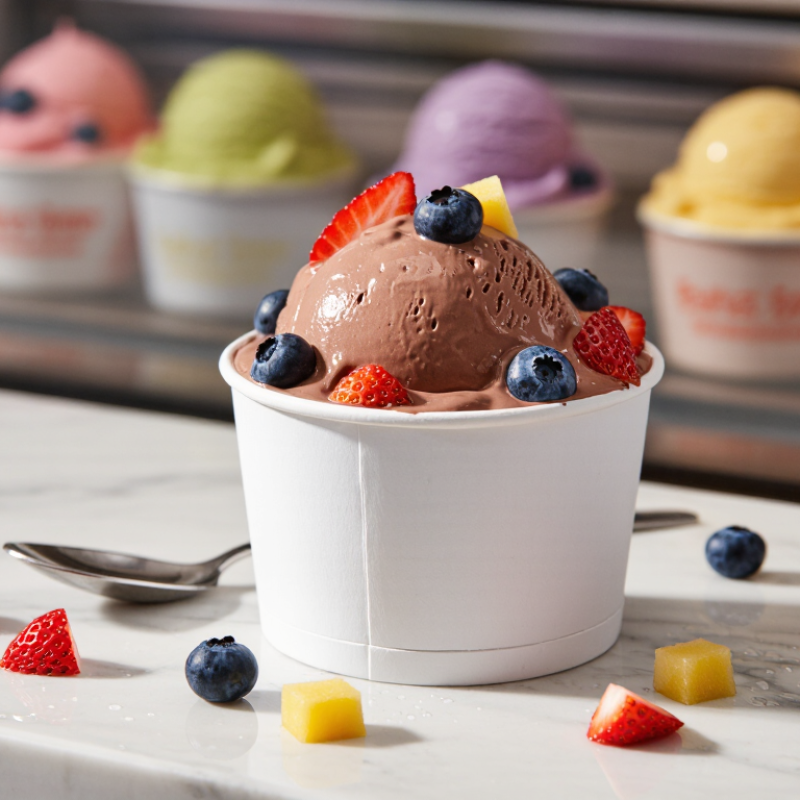
Details matter. A chocolate Cup Of Ice Cream should taste rich, not merely sweet. Fruit pieces should remain visible after freezing. The paper cup should resist softening beside a cold display case. These small signs often reveal larger production standards.
No supplier is perfect. Some offer excellent flavors but limited export support. Others provide efficient logistics but less creative product development. This guide therefore compares leading companies through practical evidence, including product quality, manufacturing experience, sustainability efforts, regional reach, and customer feedback. Samples should still be tested before any long-term contract.
The strongest suppliers will not simply sell frozen desserts. They will help buyers manage changing consumer preferences, portion control, seasonal flavors, and responsible packaging. Market data can guide a decision, but direct tasting remains essential. Sometimes, one spoonful exposes what a polished brochure hides.
The global ice cream market reached USD 83.8 billion in 2023, with a projected 4.7% CAGR, according to Grand View Research (GVR). This growth is increasing demand for reliable cup ice cream suppliers worldwide. Buyers now expect more than attractive packaging. They need stable recipes, consistent portion sizes, and dependable cold-chain delivery. A supplier’s technical experience matters when products travel through different climates and customs systems.
Professional sourcing teams should review ingredient specifications, allergen controls, production records, and food-safety certifications. Ask for recent laboratory reports and clear storage instructions. A trustworthy supplier should explain its filling process, cup materials, shelf-life testing, and response plan for temperature failures. Small details matter. A cracked lid can damage an entire shipment. I have found that sample testing reveals problems that catalogs often hide, especially melting speed and texture after refreezing.
Tips: Compare samples from several regions before signing. Check freezer temperatures during delivery. Request batch documentation. Confirm that labels meet the destination market’s rules. Discuss minimum order quantities early, because low prices can conceal costly logistics. Consider suppliers offering flexible flavors and cup sizes, but avoid choosing variety over consistency. Sustainability claims also require evidence, not attractive wording. Some packaging may look greener while performing poorly in humid storage. The market is expanding, yet supplier quality remains uneven. That gap deserves careful attention.
For 2026, reliable cup-format ice cream suppliers should prove more than attractive packaging. Their operations need a controlled cold chain from filling to delivery. The product should remain at −18°C or colder after freezing and thermal stabilization. This benchmark aligns with Codex guidance for quick-frozen foods. Short temperature fluctuations may occur during handling. They still require documentation.
Cup specifications deserve equal attention. Containers should be food-grade, dimensionally stable, and resistant to cracking below freezing. Lids need a consistent seal, with no frost trapped around the rim. Suppliers should verify fill weight, headspace, lot coding, and pallet protection. A crushed cup can expose product to contamination and customer complaints. Small details matter.
Ask for temperature records, calibration certificates, sanitation procedures, and traceability tests. Data loggers should measure product conditions, not only warehouse air. A supplier may show an impressive audit file yet provide weak delivery evidence. That gap deserves scrutiny. Codex offers an internationally respected reference, but local food rules can add stricter requirements. Buyers should compare both.
Some suppliers focus heavily on freezer capacity. That can hide risks at loading docks or during last-mile transport. Real performance depends on trained staff, rapid door control, insulated vehicles, and clear rejection procedures. I would also inspect several delivered lots, not just one sample. One successful shipment proves little. Temperature abuse may remain invisible until texture changes, ice crystals appear, or the seal becomes brittle.
Choosing the best cup of ice cream supplier in 2026 requires more than tasting samples. A practical scorecard should compare MOQ, production capacity, BRCGS status, FSSC 22000 certification, and Halal documentation. In supplier reviews, I record MOQ by flavor, cup size, and packaging format. A low MOQ may suit a launch, but it can increase unit cost and changeover waste.
Capacity figures need careful questioning. Ask for monthly output, peak-season availability, freezer space, and backup production plans. A factory claiming high volume may still lack enough filling lines during summer. Request recent production records when possible. Numbers without evidence are only estimates.
Food safety certificates deserve equal attention. Check whether BRCGS or FSSC 22000 certification is current, site-specific, and relevant to frozen desserts. Confirm the audit date, certificate scope, and any unresolved corrective actions. Halal approval should cover ingredients, processing aids, storage, and shared equipment controls. Written confirmation matters more than a logo on a sales sheet. I also compare allergen controls, temperature logs, shelf-life testing, and complaint response times. These details often reveal operational maturity. One weakness remains: suppliers may provide incomplete capacity data, especially for new facilities. That uncertainty should lower the score until an on-site audit or independent verification is completed.
The benchmark compares anonymized supplier profiles using common procurement metrics for paper and plastic ice cream cups. MOQ is shown in thousand cups per order, annual capacity in million cups, and certification coverage counts BRCGS, FSSC 22000, and Halal certification or documented compliance.
The 2026 shortlist should begin with regional capability, not popularity. North American suppliers often offer high-volume production, frozen distribution, and foodservice-ready cup formats. European suppliers commonly emphasize dense textures, clean-label recipes, and controlled portion sizes. Asian suppliers are gaining attention for flexible packaging and fast flavor development. Grand View Research reported that Asia Pacific was the fastest-growing regional market in its latest ice cream analysis. Growth is not equal everywhere.
IMARC Group estimated the global ice cream market at about USD 83.8 billion in 2024, with continued expansion through 2033. These figures vary because reports define premium, artisanal, and frozen dessert categories differently. That difference matters when comparing quotations. A reliable supplier should show audited food-safety systems, cold-chain records, allergen controls, and production capacity by season. Ask for cup-wall samples. A small detail.
Tips: Request three samples from each region, including one reformulated batch. Check melting time at room temperature, lid security, label accuracy, and delivery temperature. Do not judge texture from one tasting. Storage abuse can expose weaknesses that a factory sample hides. Supplier experience also matters during peak summer demand. I would score traceability above attractive packaging, although buyers often reverse that order. Industry forecasts are useful, but factory evidence should decide the shortlist.
For 2026, buyers should rank cup-of-ice-cream suppliers by landed cost, not factory price. Landed cost includes the product, cup, lid, inland transport, refrigeration, duties, inspection, and expected spoilage. The FAO Food Price Index reported a 4.7% annual rise in dairy prices in 2024, showing why ingredient assumptions can age quickly. Freight rates also remain unstable. A supplier offering a cheaper ex-works price may create a higher invoice after refrigerated delivery and customs delays. Ask for delivered-cost quotations using the same route, volume, temperature range, and packaging specification.
Lead time deserves equal weight. The World Bank’s Logistics Performance Index shows significant differences in customs clearance, infrastructure, and shipment reliability across markets. Buyers should request production capacity, safety-stock rules, port options, and a documented recovery plan. Then test one pilot shipment. Not glamorous, but revealing. Private-label capability should include recipe adjustment, allergen controls, artwork approval, minimum order quantities, and traceability from dairy inputs to finished cups. A low minimum order can still hide expensive tooling or slow approvals.
Sustainability needs measurable evidence, not soft promises. Ask for packaging weight, recycled-content percentage, renewable-energy data, waste records, and a current emissions calculation. Packaging is especially important because the OECD reports that global plastic waste has more than doubled since 2000. However, lighter packaging is not automatically better if it cracks during frozen transport. This ranking may remain imperfect. Climate, freight, and regulation can change faster than annual supplier reviews. Use quarterly scorecards, landed-cost audits, and verified documents to keep the ranking credible.
Record minimum order quantity, production capacity, food safety certification, Halal documents, lead time, and landed cost. Packaging, traceability, and complaint handling also matter.
A low minimum order quantity supports product launches and small market tests. However, it may increase unit costs and changeover waste. Small orders can become expensive.
Ask for monthly output, peak-season availability, freezer space, and backup production plans. Request recent production records when possible. Unverified numbers remain estimates.
Confirm the certificate is current, site-specific, and suitable for frozen desserts. Review the audit date, certificate scope, and unresolved corrective actions. A sales-sheet logo proves little.
Documentation should cover ingredients, processing aids, storage, and shared equipment controls. Written confirmation is stronger than a general claim. Details matter.
Compare landed cost, not only the factory price. Include products, cups, lids, inland transport, refrigeration, duties, inspections, and expected spoilage. Use identical routes and temperature requirements.
Ask about production slots, safety stock, port options, and recovery plans. Run one pilot shipment with temperature monitoring. It may expose hidden delays.
Check recipe adjustments, allergen controls, artwork approval, order quantities, and full traceability. Trace ingredients from dairy inputs to finished cups. Approvals may move slowly.
Request packaging weight, recycled content, renewable-energy data, waste records, and current emissions calculations. Lighter packaging is not always better if it cracks during frozen transport. That trade-off deserves testing.
Review it quarterly and verify costs, documents, capacity, and delivery performance. Climate, freight, and regulations can change quickly. The scorecard will never be perfect.
The global Cup Of Ice Cream market is entering 2026 with strong growth potential, supported by an estimated value of USD 83.8 billion in 2023 and a projected 4.7% CAGR. This overview explains the operational standards buyers should expect, including storage and transportation at −18°C, reliable cold-chain management, and compliance with internationally recognized frozen-food requirements. It also highlights key supplier evaluation criteria such as minimum order quantities, production capacity, BRCGS or FSSC 22000 certification, halal options, packaging flexibility, and export readiness.
The 2026 global shortlist is organized by supplier regions across North America, Europe, and Asia, without focusing on individual brand names. Buyers can compare suppliers through a practical scorecard covering landed cost, lead time, product consistency, sustainability practices, private-label capability, and documentation quality. By balancing commercial performance with food safety, responsible sourcing, and dependable logistics, importers, retailers, and foodservice operators can identify suitable partners for expanding their frozen dessert portfolios.

Charmlite Cup