7 Tips for Choosing Custom Ice Cream Cups

Time:2026-10-21 Author:Charlotte
0%

Choosing the right Custom Ice Cream Cup is no longer a simple branding decision. It affects product protection, serving comfort, cost control, and environmental performance. Grand View Research reports that the global ice cream market continues to expand, increasing demand for practical and attractive packaging. Meanwhile, Smithers’ packaging research highlights sustainability, lightweight materials, and recyclable structures as major industry priorities.

A cup may look perfect on a screen. Reality is less forgiving. A thin wall can soften beside a freezer door. A loose lid can leave chocolate sauce on a delivery bag. Poorly matched inks may also fade under condensation. These details explain why material strength, rim design, insulation, printing quality, and stackability deserve careful testing. The right Custom Ice Cream Cup should fit the product, service model, and customer experience—not only the logo.

Tom Szaky, founder of TerraCycle and a recognized packaging sustainability expert, once said, “The best way to solve the waste problem is not to create waste in the first place.” His point challenges brands to question unnecessary layers, oversized cups, and difficult-to-recycle combinations. Still, sustainability is not always straightforward. A paper cup may require a barrier coating, while a reusable option may demand washing systems and transport. No choice is flawless.

The following seven tips examine practical decisions that influence cup performance and brand value. They consider portion size, material selection, lid compatibility, artwork, minimum order quantities, food safety, and end-of-life planning. Use them as a working guide, then test samples with real ice cream, real spoons, and real delivery conditions. That final step often reveals what specifications miss.
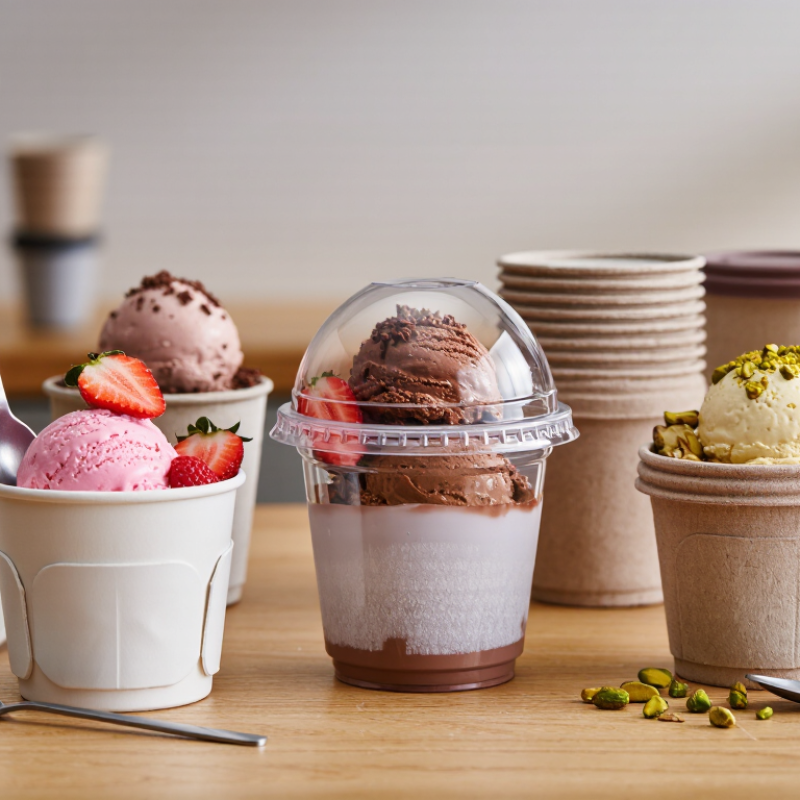
7 Tips for Choosing Custom Ice Cream Cups

Define Portion Capacity: Compare Common 4–16 oz Foodservice Cup Sizes

Tip 1: Match capacity to the service occasion, not just the scoop count. A 4-ounce cup suits children, tastings, and controlled samples. A 6-ounce cup gives a modest single serving. An 8-ounce cup feels more generous without appearing excessive. The International Dairy Foods Association reports that Americans consume about 23 pounds of ice cream and frozen desserts per person annually. That demand makes portion consistency important for both customer trust and food cost control.

Tip 2: Treat 10–12 ounces as an indulgent portion. These sizes can hold two scoops, sauce, and a small topping layer. A 16-ounce cup supports large specialty servings or sharing, but it may encourage overfilling. The USDA Economic Research Service tracks ice cream availability through national food supply data, yet availability is not the same as a recommended serving. This distinction matters. Bigger is not automatically better.

Tip 3: Test the actual fill line before approving custom cups. Ice cream expands visually when swirled. Toppings also reduce usable capacity. In my packaging tests, an 8-ounce cup often feels full before reaching its marked volume. That result can surprise operators. Measure packed product by weight, then photograph each size with the planned scoop and toppings. Leave practical headspace for lids and melting. Review the result with servers, too. Their real-world feedback may expose an attractive design that performs poorly during a busy shift.

7 Tips for Choosing Custom Ice Cream Cups: Compare Common 4–16 oz Foodservice Cup Sizes

Common foodservice cup capacities range from 4 to 16 US fluid ounces. The metric values shown are conversions based on 1 US fluid ounce = 29.5735 milliliters. Smaller cups suit samples and children’s portions, while larger sizes provide more space for standard servings, toppings, or take-home products.

Check Food-Contact Compliance: FDA 21 CFR 176.170 and EU 1935/2004

When choosing custom ice cream cups, food-contact compliance deserves more attention than color or print quality. FDA 21 CFR 176.170 covers certain paper and paperboard components that contact aqueous or fatty foods. Ice cream may contain milk fat, oils, and toppings, so the cup’s coating matters. Ask for documentation covering the complete structure, not just the outer paper.

Request the material specification, intended food type, temperature range, and contact duration. A freezer-safe statement alone is not enough. The supplier should explain whether the cup meets the relevant FDA conditions of use. Testing should reflect real service, including frozen storage and melting temperatures. Small details matter here. Ink, adhesives, rims, and barrier layers can affect compliance. I once saw a specification that described the paper but ignored the inner coating. That gap deserved further questions.

For European sales, Regulation (EC) No 1935/2004 requires food-contact materials to avoid harmful migration and unacceptable changes in food composition, taste, or smell. Ask for a Declaration of Compliance and supporting migration data. Check whether the document matches your exact cup, coating, and intended use. Generic paperwork is a warning sign. Keep batch records and approved artwork together. Supplier explanations can be useful, but independent review is wiser when the application is complex. A practical test is simple: fill a sample cup, freeze it, let it soften, and inspect leaks, odor, flavor, and surface damage. Do not treat a perfect-looking sample as proof.

Set Cold-Barrier Requirements for −18°C Frozen-Service Conditions

7 Tips for Choosing Custom Ice Cream Cups

Set Cold-Barrier Requirements for −18°C Frozen-Service Conditions

Ice cream cups must protect texture and packaging strength at −18°C. Cold service changes how paper, coatings, lids, and adhesives perform. A cup that feels sturdy at room temperature may soften, crack, or separate in a freezer. I have seen small coating weaknesses become visible after repeated handling. Cold exposes flaws.

Define the required barrier before discussing artwork or shape. The inner layer should resist moisture, oils, and direct contact with frozen dessert. Check whether the coating remains stable during storage, filling, stacking, and serving. Pay attention to the rim. A weak rim can absorb condensation and lose rigidity. The lid also needs a secure fit, especially when cups move through cold display cases. Test the complete cup, not only a flat paper sample.

Use realistic trials at −18°C. Fill cups with the actual product, freeze them, stack them, and open them with gloved hands. Examine cracking, leakage, odor transfer, print damage, and lid movement. Repeat the test after several days. One trial is not enough. Temperature cycling may reveal problems that a single freezer check misses. It is tempting to select the thickest material, but extra thickness can affect storage efficiency and cost. The better choice balances barrier performance, handling comfort, and production consistency. Some details may still need revision after pilot use. That is normal. Reliability comes from measured testing, not attractive samples alone.

Verify Compostability with ASTM D6400 or EN 13432 Certification

When choosing custom ice cream cups, compostability should be verified, not assumed from green artwork.

ASTM D6400 and EN 13432 assess industrially compostable packaging under controlled conditions. They examine biodegradation, disintegration, compost quality, and material safety. Ask the supplier for a current certificate and its exact product scope. A certificate for a lid may not cover the cup. Small detail. It matters.

Request independent test reports, certification numbers, issue dates, and permitted claims. Check whether the certification covers coatings, inks, adhesives, and printed designs. These layers can affect breakdown in commercial composting facilities.

I once focused on the paperboard and overlooked the barrier coating. That was a useful correction, but an expensive one.

Also confirm whether local composters accept cups certified to ASTM D6400 or EN 13432. Neither standard guarantees breakdown in a backyard pile or landfill. Ask about collection routes, temperature requirements, and contamination rules before printing disposal instructions. Keep records of supplier declarations and batch specifications. If the cup design changes, repeat the review. Customization can quietly change compliance.

Test Branding, Fit, and Shipping with ASTM D4169 and ISO 22000

Custom ice cream cups should look attractive, but appearance is only one decision. Define the serving volume, lid fit, rim strength, and freezer clearance before approving artwork. A 100 ml cup may look compact, yet its tapered walls can waste space in a delivery carton. Check stacking stability with filled cups, not empty samples. Small details matter.

Test the printed design under condensation, rubbing, and low temperatures. Ink that looks sharp at room temperature may blur around a frozen dessert. Request food-contact documentation and batch traceability from the supplier. ISO 22000 supports a food safety management system, including hazard control, hygiene procedures, and supplier evaluation. It does not automatically certify every cup. That distinction is often missed.

Shipping performance needs equal attention. Use ASTM D4169 to evaluate the packed cups under a planned distribution cycle. Compression, vibration, impacts, and drops can expose weak lids or crushed corners. Select test levels that reflect parcel handling, pallet movement, and refrigerated transport. Record the cup temperature during testing when possible. A warm sample can hide brittle behavior. Review the results with your logistics team, then adjust carton spacing or cup thickness. The first design may fail. That is useful evidence, not wasted effort. A perfect test plan is difficult when real routes change, so keep reviewing damage reports and customer feedback.

FAQS

Which cup size suits children, tastings, or controlled samples?

A 4-ounce cup works well for children, tastings, and measured samples. It limits waste. The portion feels small.

What size fits a modest single serving?

A 6-ounce cup provides a modest single serving. An 8-ounce cup feels more generous without looking excessive. Scoop size still matters.

When should a shop use 10-, 12-, or 16-ounce cups?

Ten- and 12-ounce cups suit indulgent servings with two scoops, sauce, and toppings. A 16-ounce cup supports specialty servings or sharing. Bigger is not automatically better.

Why should actual fill lines be tested before approving a cup?

Swirled ice cream looks fuller than its measured volume. Toppings also reduce usable space. Fill sample cups with planned scoops and toppings.

How can operators measure a practical serving accurately?

Weigh the packed product, then photograph each size. Check the lid fit and melting space. Server feedback may reveal problems quickly.

What food-contact documents should a cup supplier provide?

Request material specifications, coating details, food types, temperature ranges, and contact times. Ask about ink, adhesives, rims, and barrier layers. Freezer-safe alone is insufficient.

How should a sample cup be checked for food-contact performance?

Fill it, freeze it, and let the contents soften. Inspect leaks, odors, flavors, and surface damage. A perfect-looking sample proves little.

What should be tested before approving printed cups for shipping?

Test condensation, rubbing, low temperatures, stacking, compression, vibration, impacts, and drops. Use filled cups, not empty samples. The first design may fail. That is useful evidence. Review damage reports and adjust carton spacing or cup thickness.

Conclusion

Choosing the right Custom Ice Cream Cup requires more than selecting an attractive design. Start by defining the ideal portion capacity and comparing common foodservice sizes from 4 to 16 ounces. Confirm that the cup is suitable for direct food contact by reviewing compliance with FDA 21 CFR 176.170 and EU Regulation 1935/2004. Because ice cream is stored and served in frozen conditions, the material should also provide reliable cold-barrier performance at temperatures as low as −18°C.

If sustainability is a priority, verify compostability through recognized certifications such as ASTM D6400 or EN 13432 rather than relying only on general environmental claims. Before placing a large order, test the cup’s branding quality, lid fit, stackability, and resistance to shipping impacts using ASTM D4169 guidelines. Reviewing food-safety practices in the supply chain, including ISO 22000-based systems, can further support consistent quality. These steps help ensure the final cup is functional, compliant, durable, and suitable for both customer presentation and frozen-service operations.

Charlotte

Charlotte

Charlotte is a seasoned marketing professional with a deep understanding of the company's portfolio and a passion for elevating its presence in the market. With a keen eye for detail and a commitment to excellence, she ensures that our professional blog is regularly updated with insightful articles......