The 2026 Top Ice Cream Plastic Cup Manufacturers Worldwide guide examines the companies shaping modern frozen dessert packaging. It considers material quality, production capacity, printing accuracy, sealing performance, and delivery reliability. These factors matter when a cup travels from a high-speed filling line to a freezer shelf.
An Ice Cream Plastic Cup must resist cracking, temperature changes, condensation, and rough handling. Clear walls can showcase colorful layers, while textured surfaces improve grip for children and busy customers. Manufacturers also face growing pressure to reduce material use without weakening the rim or lid connection. That balance is difficult. Sometimes, a thinner cup looks efficient but performs poorly during transport.
Dr. Susan Selke, a respected packaging researcher, has stated, “Packaging performance depends on the entire system, not one material alone.” This view helps explain why leading suppliers study cup design, lids, filling equipment, warehouse conditions, and consumer handling together. Reliable manufacturers provide traceable specifications, consistent dimensions, food-contact documentation, and practical testing evidence. They should also explain where recycled content or alternative materials may affect clarity, strength, or cost.
This overview compares worldwide producers through a practical lens. It considers customization, minimum order quantities, mold capability, production automation, and environmental claims. Certifications alone do not guarantee excellent performance. Real samples matter.
A promising sample can still fail.
Readers should treat this ranking as a working reference, not a permanent verdict. Market conditions change, new materials develop, and regional supply risks remain difficult to predict. The strongest Ice Cream Plastic Cup manufacturer is therefore not always the largest. It is the supplier that consistently matches technical performance, commercial needs, and responsible packaging goals.
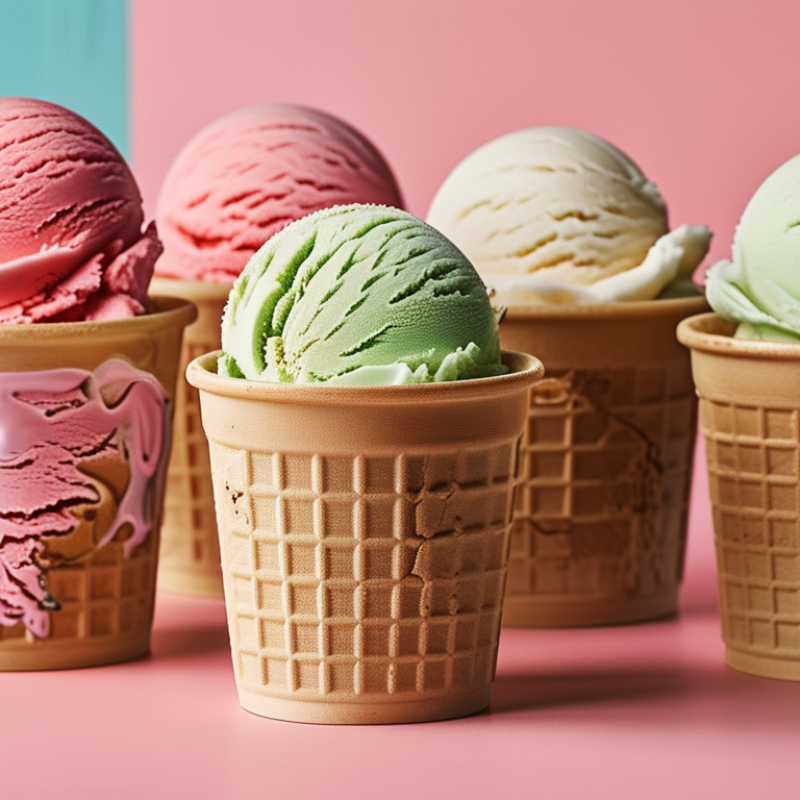
The 2026 ice cream market is projected at $79.1 billion, according to Grand View Research. This scale creates steady demand for reliable plastic cup manufacturers worldwide. Ice cream producers need cups that resist cracking, remain stable below freezing, and support efficient stacking. A poor rim design can cause leaking during delivery. That small failure can damage customer trust.
Experienced manufacturers usually offer polypropylene or polystyrene options, depending on temperature, clarity, and recycling requirements. They should provide food-contact documentation, production traceability, and consistent wall thickness. Custom printing also requires careful ink selection and testing. Designs should remain readable after condensation forms on the surface. Factory audits, sample approvals, and batch inspections can reduce avoidable quality problems. Still, no supplier is perfect. Buyers should question attractive claims and verify performance under real storage conditions.
Tips: Request frozen samples before placing large orders. Check cup weight, lid fit, sealing strength, and stacking height. Ask for migration test reports and manufacturing records. Compare delivery schedules, not only unit prices. A cheaper cup may create higher waste if it splits during filling or transport. Sustainability also needs honest evaluation. Lightweight plastic can reduce material use, but disposal infrastructure varies widely by market. Manufacturers and buyers should review local requirements instead of relying on vague environmental language.
Global ice cream market scope in 2026: US$79.1 billion, according to the market figure specified from Grand View Research. This chart shows the overall market opportunity rather than individual company or brand performance.
Unit: US$ billions. The market value represents the total global ice cream market scope and is not limited to plastic cup packaging.
Global ice cream cup manufacturing is increasingly shaped by material selection, not decoration alone. In 2023, worldwide plastic production was reported at 413.8 Mt. That figure covers many polymer types and applications, so it should not be read as cup-specific demand. Still, it shows the scale behind today’s packaging supply chains.
Polypropylene, or PP, is widely considered for ice cream cups because it tolerates freezer temperatures and repeated handling. Its light weight can reduce shipping pressure. PP also supports reliable sealing and stacking when the wall thickness is properly controlled. Polyethylene terephthalate, or PET, offers strong clarity and a firm surface. It can suit transparent cups where customers want to see layers, toppings, or color. However, PET may require different forming conditions and careful control during cold storage.
Experienced manufacturers evaluate more than appearance. They test impact resistance, lid fit, freezer cycling, seal strength, and food-contact safety. Production teams should also check resin consistency, recycled content claims, and the intended recovery system. These details matter.
A practical weakness remains. Material performance can change with additives, thickness, and processing temperature. A clear PET cup may look premium but perform poorly under rough transport. A PP cup may resist freezing well but appear less transparent. No material is perfect. I would treat the 413.8 Mt figure as useful context, not a direct forecast for ice cream cup demand.
| Material / Industry Metric | Relevant Data | Relevance to Ice Cream Cups | Manufacturing and Design Considerations |
|---|---|---|---|
| Polypropylene (PP) | Resin identification code: 5 Typical density: approximately 0.90–0.91 g/cm³ Melting range: approximately 160–170°C |
Widely used for frozen-food containers because of its low density, toughness, moisture resistance, and suitability for cold-chain applications. | Commonly processed by thermoforming or injection molding. Wall thickness, rim rigidity, stacking performance, and low-temperature impact resistance should be validated for the selected grade. |
| Polyethylene Terephthalate (PET) | Resin identification code: 1 Typical density: approximately 1.34–1.39 g/cm³ Glass-transition temperature: approximately 67–81°C |
Offers high clarity, good stiffness, and strong resistance to water vapor and gases. It is suitable when product visibility and premium appearance are priorities. | Usually produced through sheet extrusion and thermoforming for cups. Design should address brittleness at very low temperatures, flange strength, sealing compatibility, and recycling-system requirements. |
| Recycled PET (rPET) | Can be incorporated where the resin, additives, process, and jurisdictional food-contact requirements are satisfied. Mechanical properties may vary with recycled content and processing history. | Can reduce dependence on virgin PET and support recycled-content targets, particularly in clear packaging formats. | Requires documented feedstock quality, decontamination controls, traceability, and compliance with applicable food-contact regulations. Recycled content should be stated as a verified percentage. |
| Polyethylene (PE) | Common grades include HDPE and LDPE/LLDPE. Resin identification codes are 2 for HDPE and 4 for LDPE. | More frequently used for lids, liners, films, and flexible components than for rigid transparent ice cream cups. | Provides good moisture resistance and sealing performance. The selected grade must be matched to stiffness, lid fit, puncture resistance, and cold-temperature performance. |
| Global Plastics Production, 2023 | 413.8 million metric tonnes (Mt) of plastics produced globally in 2023, according to Plastics Europe’s 2024 market data. | Provides a global industry-scale reference for polymer availability and converting capacity; it is not an ice cream cup production figure. | Manufacturers should evaluate regional resin supply, recycled-content availability, energy use, logistics, regulatory requirements, and end-of-life infrastructure. |
| Primary Forming Technologies | Thermoforming and injection molding are the principal processes for rigid plastic cup production. | Both technologies can produce stackable cups with molded rims, decorative surfaces, and compatible lids. | Thermoforming is generally suited to high-volume thin-wall cups from extruded sheet; injection molding is suited to precise shapes, integrated details, and thicker or more complex parts. |
| Food-Contact Compliance | Compliance depends on the destination market, resin formulation, additives, printing inks, coatings, adhesives, and manufacturing controls. | The cup, lid, decoration, and any barrier layer must be assessed as a complete packaging system for contact with frozen food. | Relevant frameworks may include EU Regulation (EC) No. 1935/2004, EU Regulation (EU) No. 10/2011 for plastic food-contact materials, and applicable U.S. FDA requirements. |
| Key Cup-Performance Tests | Typical evaluations include dimensional tolerance, rim strength, compression, drop impact, leak resistance, seal integrity, and cold-temperature conditioning. | Testing helps confirm that cups remain functional during filling, lidding, freezing, transport, storage, and consumer handling. | Test conditions should reflect the intended filling temperature, freezer temperature, storage duration, stacking load, distribution route, and lid design. |
| End-of-Life and Recyclability | Recyclability depends on material identification, local collection, sorting, reprocessing capacity, pigments, labels, coatings, and food residue. | Mono-material PP or PET formats are generally easier to identify and process than multilayer or heavily mixed constructions. | Design-for-recycling measures include minimizing incompatible components, using detectable labels and adhesives, reducing unnecessary pigments, and providing clear material marking where required. |
Source note: Global plastics production figure based on Plastics Europe, Plastics – the Fast Facts 2024. Material-property values are typical industry ranges and may vary by grade, additives, processing method, and test standard.
Evaluating ice cream plastic cup manufacturers requires more than comparing unit prices. Production capacity shows whether a supplier can support seasonal demand without delaying shipments. Ask for monthly output, machine numbers, resin sources, and recent production records. A factory may claim high capacity, but actual availability can change during summer peaks.
MOQ affects both cost and flexibility. Lower MOQs help new products, while larger orders usually reduce packaging and molding costs. Tooling deserves close attention. Confirm mold ownership, cavity numbers, maintenance fees, replacement terms, and sample approval procedures. A simple cup may still need precise rim dimensions and stable stacking performance. Small orders cost more.
Lead time should include tooling, testing, production, and export preparation. Request a written timeline with inspection checkpoints. Cost comparisons must cover resin grade, printing, lids, cartons, freight, and possible mold charges. The cheapest quotation can become expensive after these details appear. In practical evaluations, factory samples often reveal more than sales presentations. Check wall thickness, sealing fit, odor, clarity, and resistance to freezer temperatures. I have seen evaluations rely too heavily on catalog photos. That approach needs reconsideration. A reliable manufacturer provides traceable specifications, consistent samples, and clear corrective-action records when defects occur. Capability matters, but communication under pressure matters too.
China remains a major source of ice cream plastic cups, supported by large molding capacity and flexible tooling. Manufacturers often provide custom shapes, printed sleeves, and high-volume production. Many factories now use thinner walls to reduce material use without weakening the cup rim. Quality varies, however. Buyers should inspect sealing performance, odor, stacking stability, and food-contact documentation before placing large orders.
European manufacturers usually emphasize traceability, recycled-content options, and precise production controls. Their facilities may offer cups designed for automated filling lines, cold storage, and transport vibration. They often support mono-material structures that simplify recycling decisions. Costs can be higher, and minimum order quantities may limit smaller buyers. Still, consistent dimensions can reduce downtime on busy packaging lines.
North American producers commonly focus on dependable supply, regional warehousing, and fast design changes. Their cups may serve supermarkets, restaurants, and institutional foodservice operations. Suppliers in this region often provide strong technical support for lids, freezer conditions, and printing durability.
In Asia-Pacific, manufacturers combine competitive pricing with growing investments in automation. Production hubs across Southeast Asia, Japan, South Korea, and India offer different strengths in materials and delivery speed. Local infrastructure is uneven. That matters. A low factory price may lose its advantage when shipping delays, inspections, or tooling revisions appear. Practical audits and sample testing remain essential.
In 2026, leading ice cream plastic cup manufacturers must prove more than attractive designs and stable production. Food-contact safety begins with material selection, documented testing, and controlled manufacturing. For polypropylene or polyethylene cups, FDA 21 CFR 177.1520 applies only when the polymer, additives, processing method, and intended use match the regulation. Suppliers should provide resin declarations, migration data, and clear temperature limits.
EU Regulation 10/2011 requires deeper control across the plastic food-contact chain. Manufacturers should assess overall migration, specific migration, and suitable food simulants for frozen desserts. Testing should reflect real conditions, including storage time, temperature changes, and contact with fatty ingredients. A compliant cup needs a reliable Declaration of Compliance. Paperwork alone is not enough.
ISO 22000 strengthens the factory’s food safety management system. It supports hazard analysis, sanitation controls, traceability, corrective actions, and supplier evaluation. During a factory audit, buyers should review batch records, laboratory reports, calibration logs, and complaint handling. A cup may look clean while production controls remain weak. That risk is easy to miss. Experienced manufacturers also test lid fit, stacking pressure, brittleness, and condensation performance. Results should connect to specific production lots. No system is perfect. Even strong factories need to investigate unexpected migration results, printing defects, or inconsistent wall thickness instead of hiding them. Reliable sourcing depends on evidence, repeatable controls, and honest technical communication.
: The manufacturer should offer stable quality, traceable production, and food-contact documentation. Ask for material details, temperature limits, migration reports, and batch records. Paperwork matters. It is not enough.
Polypropylene and polystyrene are common choices. The right material depends on freezing temperatures, clarity, strength, and recycling conditions. Each option has trade-offs. No material solves every problem.
Request frozen samples before approving large quantities. Check cup weight, wall thickness, lid fit, and sealing strength. Store filled samples below freezing. Then inspect cracking, leaks, and deformation.
A loose lid can leak when containers move inside a delivery box. Condensation may also weaken grip and label readability. Test filled cups during stacking and transport simulations. Small failures become expensive.
Review production lots, laboratory reports, calibration logs, and complaint records. Ask whether test results connect to specific batches. This connection helps identify repeated defects. Without traceability, investigation becomes guesswork.
Suppliers should assess overall migration and specific migration. Testing should reflect frozen storage, temperature changes, and fatty ingredients. Request a valid food-contact declaration. Do not trust attractive claims alone.
Ink selection must match plastic surfaces and cold, wet conditions. Test printed cups after condensation forms. Check smearing, fading, and poor adhesion. A beautiful sample may age badly.
No. A low unit price may hide waste from cracks, leaks, or rejected batches. Compare delivery schedules, inspection methods, and replacement support. Calculate the full cost. The cheapest option can disappoint.
Review material weight, recyclability, and local disposal infrastructure. Lightweight plastic may reduce material use, but recycling access differs widely. Ask for measurable evidence. Environmental language can be vague.
An audit should examine sanitation, hazard controls, supplier evaluation, and corrective actions. Inspect stacking tests, brittleness checks, and condensation testing. Strong systems still make mistakes. Honest factories investigate them.
The 2026 global ice cream packaging market is supported by strong demand, with the overall ice cream market projected at approximately $79.1 billion. This article examines how an Ice Cream Plastic Cup can meet the needs of manufacturers, distributors, and food producers through practical material selection, reliable performance, and scalable production. It compares PP and PET options while considering the broader plastics industry, which reached an estimated 413.8 million metric tons of global output in 2023.
The guide also explains how to evaluate manufacturers across China, Europe, North America, and Asia-Pacific using production capacity, minimum order quantity, tooling requirements, lead time, and total cost. In addition, it highlights essential quality and food-contact considerations, including FDA 21 CFR 177.1520, EU 10/2011, and ISO 22000. These criteria help buyers identify suitable suppliers for consistent, compliant, and efficient ice cream cup production.

Charmlite Cup