What Are the Top Types of Ice Cream Cups?

Time:2026-09-21 Author:Madeline
0%

Choosing the right Ice-Cream Cup affects more than presentation. It influences texture, temperature, portability, cost, and customer experience.

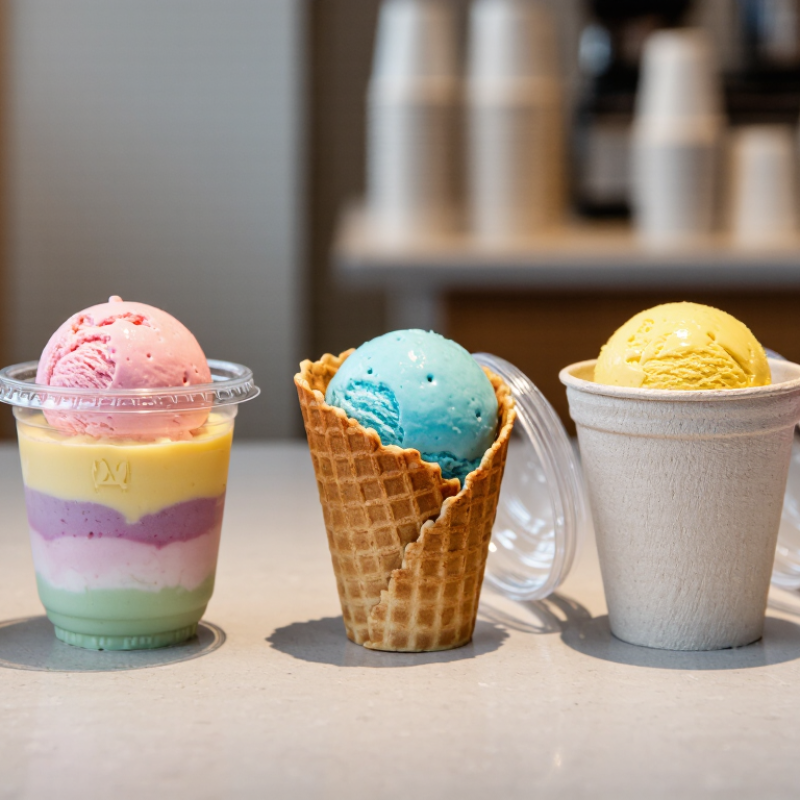
A well-designed cup keeps a scoop stable while preventing sticky leaks around the rim. Paperboard cups feel familiar and support printed branding. Plastic cups offer visibility and durability, especially for layered desserts. Waffle cups add a crisp, edible finish, although they soften quickly beside melting ice cream. Compostable fiber options can reduce plastic use, but their performance depends on coatings, moisture resistance, and disposal systems.

No cup is perfect.

This guide examines the top types of ice cream cups through practical details that matter in real service. It considers insulation, lid fit, stacking, serving size, food safety, and environmental claims. A busy shop may prefer sturdy cups that survive delivery bags and crowded freezers. A premium dessert counter may value transparency, texture, and visual appeal more highly.

Materials should be checked through reliable supplier specifications and recognized food-contact standards. Marketing terms can sound impressive without explaining actual performance. “Eco-friendly” is not a complete answer. Buyers should ask how the cup is produced, used, and processed after disposal.

The best choice depends on the setting. A small tasting portion needs different protection from a large takeaway sundae. Even experienced operators may discover weak points during hot weather or transport trials. Testing one cup with a real scoop, lid, and delivery route often reveals more than a product description. This comparison will help readers judge each option clearly and choose a cup that balances function, appearance, and responsible use.
What Are the Top Types of Ice Cream Cups?

What Are Ice Cream Cups and Why Do They Matter?

Ice cream cups are small containers designed to hold, protect, and present frozen desserts. They come in several common types, including paper cups, plastic cups, compostable fiber cups, and edible waffle cups. Each option changes the eating experience. A crisp waffle cup adds texture, while a paper cup feels practical for takeaway service. Plastic cups usually offer stronger visibility and leak resistance, but they may create more environmental concerns.

Their importance goes beyond appearance. A well-designed cup helps slow melting, supports clean serving, and keeps toppings from spilling during transport. It should remain stable when filled with dense ice cream, sauces, or fruit. In busy dessert shops, cup shape also affects scooping speed and portion consistency. I have found that narrow cups can make servings look generous, but they may leave little room for toppings. No cup solves every problem. Choosing one often requires balancing insulation, cost, strength, and disposal needs.

Tips: Match the cup to the serving situation. Choose sturdy paper or fiber for delivery, and use waffle cups for immediate serving. Check whether the rim feels smooth and whether the base stays steady on a tray. Test the cup with melting ice cream before ordering large quantities. Small details matter. Even experienced operators can overlook condensation, especially during hot weather.

Which Materials Are Commonly Used for Ice Cream Cups?

What Are the Top Types of Ice Cream Cups?

Paperboard cups remain a familiar choice for ice cream shops, events, and takeaway counters. They feel lightweight but sturdy in the hand. A moisture-resistant inner coating helps prevent leaks and softening. However, paper cups are not automatically recyclable everywhere. Their coating and local sorting systems matter. Clear labeling is important.

Plastic cups usually use polypropylene or polyethylene terephthalate. These materials resist moisture, grease, and cracking in cold freezers. They also show colorful desserts clearly. Polypropylene handles temperature changes well, while PET often offers better clarity. Still, plastic can feel less premium. It may also create more waste when customers discard it after one use.

Molded fiber cups are made from processed plant fibers. Their textured surface gives them a natural, less polished appearance. Some versions include water-resistant coatings for frozen desserts. These cups can perform well, but they are not perfect. A weak coating may soften around melting ice cream. Composting claims also depend on local facilities, not only the material itself. In practice, cup selection should match serving time, freezer conditions, lid fit, and disposal options. No material wins every test. During busy service, a slightly thicker cup can prevent messy leaks and uncomfortable cold hands. That small detail is easy to overlook.

What Are the Top Types of Ice Cream Cups? - Which Materials Are Commonly Used for Ice Cream Cups?
Ice Cream Cup Type Common Material Typical Use Key Advantages Main Limitations Insulation Performance Recycling or Disposal Considerations
Paperboard Cup Food-grade paperboard, often with a thin polyethylene or water-based coating Takeaway scoops, frozen yogurt, gelato, and portion servings Lightweight, printable, stackable, and comfortable to hold Can soften or leak if the coating is damaged or the cup is exposed to moisture for a long time ★★★☆☆ Moderate Recyclability depends on the coating, local facilities, and whether food residue has been removed
Plastic Cup Polypropylene (PP), polyethylene terephthalate (PET), or polystyrene (PS) Ready-to-eat desserts, takeaway portions, layered ice cream, and chilled products Moisture-resistant, durable, lightweight, and available in clear or opaque formats Some plastics have limited recycling access; thin cups may deform under heat ★★★☆☆ Moderate Recycling depends on the resin type, cup design, contamination level, and local collection system
Foam Cup Expanded polystyrene (EPS) Cold desserts requiring low-cost, lightweight packaging Good insulation, low weight, and resistance to condensation Bulky, less durable than many rigid plastics, and not accepted by many recycling programs ★★★★★ Very High Often requires specialized collection; disposal rules vary by location
Bioplastic Cup Polylactic acid (PLA) or other bio-based polymers Cold desserts and foodservice applications marketed with renewable-material content Can be made partly from renewable resources and may offer clear, rigid construction Industrial composting is usually required; it may not biodegrade in ordinary outdoor conditions ★★★☆☆ Moderate Usually needs a commercial composting facility; it should not automatically be placed in household recycling
Aluminum Cup Thin-gauge aluminum Single-serve frozen desserts, baking-compatible portions, and premium presentation Excellent barrier against light, oxygen, and moisture; rigid and highly heat resistant Higher material cost, can dent easily, and may feel cold to hold ★★★★☆ High Aluminum is widely recyclable when accepted locally and when excessive food residue is removed
Reusable Plastic Cup Rigid polypropylene (PP), Tritan-type copolyester, or other durable food-contact plastic Reusable dessert service, home storage, events, and foodservice operations Durable, washable, and suitable for repeated use when properly maintained Higher upfront material use; washing requires water and energy ★★★☆☆ Moderate Best environmental performance generally depends on repeated reuse and correct end-of-life recycling
Edible Wafer Cup Baked wafer made primarily from flour, starch, sugar, and vegetable fat Immediate serving of scoops without separate disposable packaging Edible, lightweight, and eliminates the need to discard a conventional cup after use Fragile, moisture-sensitive, and unsuitable for long storage of melting products ★☆☆☆☆ Very Low Typically eaten after use; uneaten portions can generally be treated as food waste where facilities exist

Note: Actual performance, recyclability, and compostability vary according to cup construction, coatings, food residue, local waste-management infrastructure, and applicable regulations.

What Are the Main Types of Ice Cream Cups?

Ice cream cups are chosen by more than appearance. The main types include paperboard cups, plastic cups, molded-fiber cups, and edible wafer cups. Each handles temperature, moisture, and serving speed differently. In a busy dessert counter, a firm rim matters because soft cups collapse during filling. Paperboard cups are lightweight, printable, and comfortable to hold. A coated inner layer helps resist melting ice cream, although poor sealing can cause leaks.

Plastic cups provide strong moisture resistance and clear product visibility. They suit takeaway orders, layered desserts, and freezer storage. However, thin walls may feel weak, while thicker designs use more material. Molded-fiber cups offer a paper-like feel and can support waste-reduction goals when local facilities accept them. That condition matters. Compostable does not mean every facility processes the cup. Food-contact approval, temperature range, and lid fit should be checked before purchase.

Edible wafer cups create a memorable serving experience and remove the need for disposal. They work best with firm scoops and quick service. Humidity can soften the edge. For delivery, I would test a filled cup for at least thirty minutes before approving it. This simple check can reveal soggy walls, loose lids, or awkward stacking. I once focused too much on appearance and overlooked condensation around the base. That mistake showed me that cup selection needs real handling tests, not just a catalog review. Operators should compare insulation, dimensions, storage space, and customer comfort together.

How Do Ice Cream Cups Differ by Size, Shape, and Function?

Ice cream cups differ most clearly in size, shape, and intended function. The U.S. Food and Drug Administration lists 2/3 cup as the reference serving amount for ice cream. Smaller 3-ounce cups suit tastings, children, and portion-controlled service. Standard 5- to 8-ounce cups support regular servings. Larger containers work better for sharing, but they can increase melting and topping waste.

Shape changes the customer’s experience. A wide, shallow cup makes scooping and toppings easier. A tall cup holds layered desserts and reduces spills during takeaway. Straight walls improve stacking and storage efficiency. Tapered walls often feel easier to hold, especially when the ice cream becomes soft. However, a visually attractive shape may waste interior space. That detail deserves more attention.

Function also determines material and construction. Paperboard cups offer printability and a familiar hand feel, while plastic cups provide stronger moisture resistance and product visibility. Foodservice packaging analysis continues to emphasize lightweighting and resource efficiency. Grand View Research valued the global ice cream market at about 79.08 billion dollars in 2023, suggesting strong demand for practical serving formats. Yet market growth alone does not identify the best cup. Operators should test rim strength, condensation, lid fit, freezer performance, and disposal conditions. A cup that looks efficient may still fail after ten minutes in a customer’s hand.

How Can You Choose the Right Ice Cream Cup?

What Are the Top Types of Ice Cream Cups?

How Can You Choose the Right Ice Cream Cup?

Choosing an ice cream cup starts with the serving experience, not appearance. Paper cups suit quick takeaway orders and offer a comfortable grip. Plastic cups provide clear product visibility and resist moisture well. Insulated cups help slow melting during outdoor service. Compostable options may support sustainability goals, but their performance can vary with temperature and storage conditions.

Consider portion size, lid fit, freezer space, and transport distance. A narrow cup can reduce spills, while a wider opening makes toppings easier to add. Check whether the cup stays firm when filled with dense ice cream. Food-contact safety should also match local requirements. Small details matter.

Tips: Test cups with real servings. Add sauces, toppings, and a fitted lid. Hold each cup for several minutes. Watch for softening, leaking, or awkward scooping. Ask staff for honest feedback.

Appearance can mislead. A sturdy-looking cup may become weak near melting ice cream. I would also avoid choosing only by price, because poor stacking can waste storage space. Sometimes the best cup is not the most attractive one. It simply protects the dessert, feels pleasant in the hand, and suits the way customers actually eat.

What Are the Top Types of Ice Cream Cups? How Can You Choose the Right Ice Cream Cup?

Cup capacity should match the serving size and the way the ice cream will be served. Small sample cups are suitable for tastings, 4 fl oz cups commonly fit a single scoop, 8–12 fl oz cups provide space for multiple scoops and toppings, and 16 fl oz pint cups are designed for take-home portions. Actual capacities and dimensions may vary by supplier, so confirm the product specification before ordering.

FAQS

What are ice cream cups designed to do?

They hold, protect, and present frozen desserts during serving or transport.

Which materials are commonly used for ice cream cups?

Common options include paper, plastic, compostable fiber, and edible waffle cups.

What cup size suits different serving occasions?

Small three-ounce cups work well for tastings, children, and controlled portions.

How does cup shape affect the eating experience?

Wide, shallow cups make scooping and topping easier.

Which ice cream cup works best for takeaway orders?

Sturdy paper or fiber cups suit short-distance takeaway service.

What should be tested before buying cups in bulk?

Fill sample cups with dense ice cream, sauce, and toppings.

Are compostable cups always the best environmental choice?

Not necessarily. Their performance can change with temperature, storage, and moisture.

How can operators balance price, strength, and appearance?

Compare insulation, stability, storage efficiency, disposal needs, and customer comfort.

Conclusion

Ice cream cups are essential serving containers that protect the product, support convenient handling, and improve the overall eating experience. An Ice-Cream Cup can be made from paper, plastic, foam, or other food-safe materials, with each option offering different benefits in terms of strength, insulation, recyclability, appearance, and cost. The right material should match the serving environment, storage needs, and sustainability goals.

Common types include single-serving cups, larger family-size containers, insulated cups, disposable paper cups, reusable plastic cups, and specialty designs for takeout or events. They may differ in size, shape, wall thickness, lid style, and ease of stacking. When choosing an ice cream cup, consider portion size, temperature control, durability, transport, presentation, environmental impact, and compatibility with spoons or toppings. A well-selected cup should keep the ice cream secure while providing practical, attractive, and comfortable service.

Madeline

Madeline

Madeline is a dedicated marketing professional with a wealth of expertise in our company's core offerings. With a keen understanding of the industry, she brings a unique perspective to her role, consistently delivering high-quality content that highlights the superior aspects of our products. As......